Water behaves differently in London than it does a few towns over. Our clay-heavy subsoils hold moisture, frost heave is real, and seasonal swings can turn a barely damp lawn in May into a bog by October. If you own a home here, drainage touches everything: the health of your foundation, the condition of your yard, and the value of your property. Picking the right drainage contractor is not about who can trench the fastest, it is about who understands the ground under your feet, the legal places you can send water, and how to prevent new problems while solving the old ones.
Below are ten questions I advise homeowners to ask before hiring drainage contractors in London, Ontario. They are drawn from projects spanning tight Old North lots to new builds near the city’s edge, places where downspouts, weeping tiles, and clay soils meet with mixed results. Ask these questions, and insist on specifics, not generalities.
Why this matters in London’s soils and climate
London’s dominant clay and silt soils drain slowly. After rainfall, surface water lingers, then percolates down at a crawl. Saturated clay pushes hydrostatic pressure against foundation walls, which is why many basements show hairline cracks and efflorescence near the floor line. When winter arrives, that same moisture can freeze and expand, opening joints and shifting pavers. On the surface, a gentle swale that works in July can become a skate rink in January.
Municipal rules add another layer. You cannot legally pipe foundation drainage to the wet basement london ontario sanitary sewer. Newer subdivisions often have lot grading plans that must be respected, and some properties back onto regulated areas where the Upper Thames River Conservation Authority has a say. That is the context every solution must fit into, whether you are replacing deteriorated weeping tiles, installing french drains, or tackling stubborn backyard drainage.
1) What problem, exactly, are we solving?
Good contractors start by defining the problem in observable terms: water at the base of the north wall after two days of rain, pooling along the east fence within one hour of a summer storm, sump cycles every 12 minutes during thaws. Ask the contractor to point to the source, not just the symptom.
A careful assessment in London should include the soil type, downspout discharge locations, the slope from foundation to property lines, and the presence or absence of existing weeping tiles. On one job in Byron, the homeowner had been quoted for a full perimeter french drain for a soggy lawn. The real issue turned out to be three downspouts dumping 2,000 to 3,000 litres per storm beside the foundation. Fifteen metres of solid pipe to a curb drain and a bit of topsoil reshaping cured it. No perforated pipe needed.
You want a clear, written description of the problem and how the proposed system breaks the chain from water source to damage. If the contractor jumps straight to trench depth and pipe diameter before explaining the water path, slow them down.
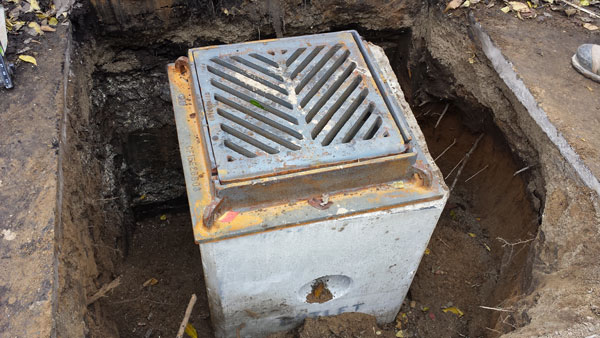
2) Do we need permits, utility locates, or conservation approvals?
This is not paperwork for paperwork’s sake. In Ontario, any digging requires a utility locate. A reputable firm will request locates through Ontario One Call and schedule work after the utilities are marked. Ask to see the locate ticket.
Permitting varies with scope. Exterior waterproofing that exposes footings sometimes triggers permitting or inspection requirements, especially on older homes. Discharging stormwater to the street, tying into a municipal storm lead, or altering lot grading may need city approval. If your yard backs onto a ravine or regulated floodplain, the Upper Thames River Conservation Authority may require a permit for grading changes. A contractor who has worked in London for years will explain which rules apply and build the lead time into the schedule.
I have watched jobs stall for weeks because a crew started without locates and hit an old shallow gas service in the alley. The repair and shutdown caused more grief than the original water issue. Get clarity upfront.
3) What solutions are on the table, and why these ones?
There is no single right answer for drainage. The tools are familiar, but the mix matters. In London, you will hear about french drains, weeping tiles, regrading, dry wells or soakaway pits, sump pumps, and downspout extensions. Ask the contractor to compare at least two viable approaches and justify the one they recommend.
A surface level french drain, which is essentially a trench with perforated pipe and stone wrapped in fabric, can intercept water moving across a yard. It is a common fix for backyard drainage in London, Ontario where neighbours’ lots shed water toward yours. It is not a cure for high groundwater pushing through a basement slab. For that, you are looking at interior perimeter drains tied to a sump, or a full exterior weeping tile replacement at footing level.
Listen for trade-offs. Exterior excavation to footing depth can be disruptive but protects foundations from the outside. Interior weeping tiles are less invasive outside, but you sacrifice some slab edge and rely on a pump. Regrading and downspout management are cheaper and often eliminate half the problem before you pick up a shovel for anything else.
4) Where will the water go, and is that discharge legal?
Moving water from one spot to another does not help if the destination is illegal or ineffective. In London, you cannot connect foundation drainage or downspouts to the sanitary sewer. Many older homes once had downspouts tied into a combined system. During retrofits, those need to be disconnected and rerouted. Some properties have storm leads at the curb. Others have swales directing water to catch basins. If there is no storm connection, the options are surface discharge to a legal point, a soakaway pit sized to the soil percolation rate, or infiltration through permeable hardscape.
Ask the contractor to show, on a sketch, where each pipe will discharge and how overflow is handled during large storms. On a home in Old South, we used a two stage approach: solid pipe from downspouts to the side yard, then a shallow swale carrying overflow to a rear catch basin. During the August cloudburst last year, the basin overtopped as designed, and water spread in a thin sheet toward the lane rather than backing toward the foundation. Good design anticipates extremes.
5) What materials and installation details will you use?
This is where bids that look similar on the surface reveal real differences. For underground drainage in clay soils, I prefer rigid PVC sewer pipe, such as SDR 35, for main runs. It holds grade better than light duty corrugated and resists crushing. For french drains, a perforated pipe works, but only when wrapped in a non woven geotextile and surrounded by clean, washed stone. Ask about the fabric weight and gravel gradation. Fines in the backfill will clog your system within a season.
Depth and slope matter. In London’s climate, keep perforated lines below frost where possible so freeze thaw cycles do not heave the trench and break grade. Typical slopes run 1 to 2 percent for gravity drains. Cleanouts every 15 to 30 metres are cheap insurance for future maintenance. For weeping tiles at the footing, look for a minimum of 150 mm of washed stone under and over the pipe, a dampproofing or waterproofing system on the wall, and a positive connection to a sump or storm outlet.
I still see quotes specifying sock wrapped corrugated pipe laid straight into native clay, no fabric, minimal stone. It installs quickly and fails quickly. Pin the contractor down to materials by brand or spec, not just marketing terms like premium or contractor grade.
6) What is your specific experience with London properties and soils?
The phrase drainage contractors London Ontario attracts firms from outside the city. Some are excellent, some learn on your dime. Ask for recent projects within London, ideally in a neighbourhood with soils like yours. Old North and Old South tend to have heavy clays and tight setbacks. Byron and Lambeth get a mix of clay and sandy lenses. Newer subdivisions have engineered grading and swales you must not disrupt.
Ask for addresses you can drive by and permission to call past clients. https://tysonwxkw466.trexgame.net/how-to-choose-the-best-basement-waterproofing-in-london-ontario You want to hear how the yard looked a month after work, not the day the trench was backfilled. Did settlement occur along the trench line? Did water simply move to another corner? Was cleanup thorough? Two or three reference calls can tell you more than a glossy brochure.
A small anecdote: on a Westmount infill, the contractor had deep experience with french drains London Ontario wide but little with the way builder grade backfill settles against new foundations. Their drain line sat a few centimetres high relative to the target elevation. First storm, water skirted the top of the trench and ran along the fence. They returned, excavated 30 metres of line, and reset the grade. Experience would have prevented the mistake.
7) What will it cost, and what controls the price?
Expect ranges. For backyard drainage London Ontario homeowners often see costs between 45 and 85 dollars per linear foot for a basic surface level french drain, including fabric, washed stone, and a perforated pipe, assuming reasonable access. Full exterior weeping tile replacement along a side wall can run 180 to 300 dollars per linear foot, higher if you have deep footings, porch tie ins, or require porch underpinning. Interior perimeter drains with a sump commonly land between 70 and 140 dollars per linear foot, plus the pump and electrical.
Variables include access for machinery, need for hand digging near utilities, depth to footings, the distance to a legal discharge point, tree root management, and restoration scope. A 15 metre discharge line to a curb cut with asphalt restoration adds a few thousand dollars. A yard with a large maple near the trench may require an arborist and root care, which adds cost and time.
Cheapest is not always least expensive. One owner saved 1,200 dollars by choosing corrugated pipe for a long run to the rear. Two winters later, freeze thaw cycles and minor trench movement bellied the line, and water pooled. They paid again to reinstall in rigid pipe. Ask the contractor to identify where they will not compromise and where they can offer options.
8) How will you protect the property during and after the work?
Trenches and machines are hard on lawns, gardens, and paving. Good contractors plan access routes, lay down protective mats, and strip and save topsoil for reuse. Ask how they will handle spoil, where stone will be staged, and how they will separate clean gravel from native clay on site. You want a yard that drains and looks right a month after the job, not a lumpy mess.
Restoration quality varies. Sod over fresh trench lines often sinks as backfill consolidates, especially in clay. A smart approach is to slightly crown the trench and return for touch ups within a season. For asphalt or concrete cuts, ask if they will saw cut full depth, compact base in lifts, and match joints tightly. If they remove fence panels for access, who handles reinstallation and alignment? A written plan now prevents long arguments later.
On one Richmond Street lot, a contractor agreed verbally to protect a flagstone path, then drove a mini excavator across it when time was tight. Repairing the broken stones cost nearly as much as the original drainage work. Written protections would have shifted that cost where it belonged.
9) What proof of insurance, WSIB, and licensing do you carry, and what is in the contract?
You are hiring a crew to dig near utilities, foundations, and sometimes neighbour lines. If something goes wrong, you need to know the firm is insured and covered by the Workplace Safety and Insurance Board. In London, I expect to see a certificate of insurance naming you as the certificate holder, a WSIB clearance letter, and, if required for specific scopes, any city licensing or prequalification.
For your own sanity, keep contract basics tight: a detailed scope of work, materials by spec, start and completion windows that account for weather, a payment schedule that ties draws to milestones, and a clear process for change orders. Avoid heavy deposits. Ten to twenty percent on signing, progress draws as work proceeds, and a holdback until after restoration is typical. Clarify who obtains permits and pays associated fees.
Here is a compact checklist of documents worth verifying before work begins:
- Ontario One Call locate ticket, valid for the entire work area and current Certificate of insurance, liability and, if applicable, auto and equipment WSIB clearance letter tied to the exact legal name of the contractor Written scope and contract with payment schedule and change order terms Written warranty on workmanship and materials, with conditions and duration
10) How will performance be verified and maintained?
A drainage system is only as good as its first big storm. Ask how the contractor will confirm performance. For surface drains, a water test with a hose along the swale line shows if grade carries water as intended. For buried lines, cleanouts allow you to flush and camera the run. On foundation systems, ask for photos of the weeping tile and stone at footing level before backfill, and for sump function to be demonstrated.
Maintenance keeps systems working in clay country. Cleanouts get flushed every year or two. Catch basin grates get cleared after leaf fall. Sump pumps gain a high water alarm and a battery backup if the neighborhood loses power during thunderstorms. On a house near Masonville, a 150 dollar alarm saved a finished basement when a breaker tripped during a storm and the owner was out of town.
Ask for a maintenance sheet and the schedule they recommend. A ten minute routine twice a year often doubles the service life of a system.
When do you choose french drains, weeping tiles, or grading fixes?
Marketing often treats french drains as a catch all. They are not. Surface water moving across a lawn, from a higher neighbour lot to yours, is a good candidate for a shallow french drain or a regraded swale. Water seeping at the base of a basement wall in winter often points to a footing drain or weeping tile issue. If you read about weeping tiles London Ontario and picture just one orange clay pipe, remember modern systems use perforated PVC with proper stone and fabric, and they need a clear discharge point.
For homeowners comparing common options, here is a concise, apples to apples view:
- Exterior weeping tile replacement at footing level, best for persistent foundation seepage or failed clay tiles, higher cost, exterior disruption, strong long term protection Interior perimeter drain with sump, good for hydrostatic pressure relief when exterior access is limited, less exterior impact, relies on pump performance and power Surface french drain for backyard drainage, intercepts lateral surface flow, useful where regrading alone cannot fix pooling without affecting neighbours Regrading and downspout extensions, least invasive, often the first 50 percent of any fix, must respect subdivision grading plans Permeable surfaces or a soakaway pit, handles smaller storms on site, requires soil testing and careful sizing in clay to avoid a bathtub effect
A seasoned contractor will often propose a sequence: start with regrading and downspout routing, measure the effect over a few storms, then decide if subsurface work is still needed. The cheapest litre of water to manage is the one you keep away from trouble in the first place.
Clues you are hearing a solid plan
You will know you are on the right track when a prospective contractor asks you as many questions as you ask them. They want to know where water shows up, how long it lingers, whether the problem is seasonal, what neighbours have done, and where the nearest storm outlets are. They sketch grades with a marker rather than talk only about trench widths. They can speak to french drains London Ontario projects by neighbourhood, mention the quirks of local soils, and steer you away from tying anything to the sanitary system.
They will say no to certain shortcuts. No to fabric free stone, no to perf pipe without cleanouts, no to dumping water on a neighbour, no to trenching across a utility mark because the meter looks five feet away. They will explain how they set grade and how they protect it during backfill so a perfect trench does not belly in a week. They will set expectations about settlement and schedule a post storm check.
What I ask during site walks
When I meet a homeowner, I walk the downspout lines first. I look for splash pads that rest below grade, leaders that end a metre from the wall, and connections that vanish into mystery pipes. I look for the low points of the yard, not where it is wet today, but where it would be wet for any storm. I glance at the neighbour’s yard to see which way their lawn tips. I ask about past sump behaviour and whether the basement smell changes after a thaw.
I also look for easy wins. A bag of topsoil and a half hour with a rake against the foundation does not sell like a french drain, but it often moves the needle. If a contractor skips these basics and heads for the trencher, think twice.
Warranties, but read the fine print
Most reputable firms offer a workmanship warranty, often one to five years for surface drainage and longer for foundation work. Materials like PVC pipe and pump units carry manufacturer warranties. Read the conditions. Warranties do not cover acts of nature beyond design storms, homeowner changes to grading, or third party damage. They also assume maintenance. If leaves clog a basin and the yard floods, that is seldom a warranty claim.
Ask how warranty service is handled during spring rush. A firm that commits to a 48 hour response during storm season shows they take aftercare seriously. Get the term in writing, understand what triggers a callout, and make sure your contact info is on file properly.
A note on timing and weather
Drainage work in London rides the weather. Spring is busy and wet, summer is ideal for restoration, fall is a last chance before frost, and winter work is possible but slower. If your basement is taking on water, you do not have the luxury of waiting nine months for the perfect window. A good contractor will stabilize your situation quickly with temporary measures, such as extensions and pumps, then phase in permanent solutions. Ask how they handle rain days and how they protect open trenches if a storm arrives mid job.
Bringing it all together
Choosing among drainage contractors London Ontario homeowners have many choices, and the best one for you is the firm that can explain your water path, propose a legal discharge, specify durable materials, and back their work with references and documentation. The right contractor will treat your property as a system, not a set of trenches, and will respect the neighbourhood around you when routing water. They will talk plainly about costs and variables, suggest a sequence that starts with simple fixes, and provide maintenance steps to keep systems working.
Whether you end up replacing weeping tiles, adding targeted french drains, or reshaping a yard for better backyard drainage, insist on clear thinking and clear writing. Water follows the path of least resistance. With the right partner, you can choose where that path goes.
Ashworth Drainage — Business Info (NAP)
Name: Ashworth DrainageAddress: 514 Hale St, London, ON N5W 1G8
Phone: (519) 660-9375
Website: https://www.ashworthdrainage.ca/
Email: [email protected]
Hours:
Monday: 9:00 AM – 5:00 PM
Tuesday: 9:00 AM – 5:00 PM
Wednesday: 9:00 AM – 5:00 PM
Thursday: 9:00 AM – 5:00 PM
Friday: 9:00 AM – 5:00 PM
Saturday: Closed
Sunday: Closed
Open-location code (Plus Code): XRR3+HV London, Ontario
Map/listing URL: https://maps.app.goo.gl/9kaoXAxRtJRP1ThS9
Embed iframe:
Socials (canonical https URLs):
Facebook: https://www.facebook.com/ashworthdrainage/
X: https://twitter.com/ashworthrules
Instagram: https://www.instagram.com/ashworthdrainage/
https://www.ashworthdrainage.ca/
Ashworth Drainage provides basement waterproofing and foundation repair services in London, Ontario and surrounding areas in Southwestern Ontario.
The company helps homeowners address wet basements, water intrusion, and drainage issues with solutions that fit the property’s conditions.
Service requests can include foundation repair, waterproofing options, sump pump and drainage-related work, and related assessments.
Ashworth Drainage is based at 514 Hale St, London, ON N5W 1G8.
To reach the team, call (519) 660-9375 or email [email protected].
Business hours are Monday to Friday 9:00 AM–5:00 PM, with the office closed Saturday and Sunday.
For directions and listing details, use the map listing: https://maps.app.goo.gl/9kaoXAxRtJRP1ThS9.
Popular Questions About Ashworth Drainage
What does basement waterproofing help prevent?Basement waterproofing is intended to reduce water intrusion and moisture problems that can lead to dampness, leaks, odors, and damage over time.
How do I know if I may need foundation repair?
Common signs can include visible cracks, water seepage, shifting or uneven areas, or recurring moisture problems; an on-site assessment is usually the best way to confirm causes and options.
What areas does Ashworth Drainage serve?
Ashworth Drainage serves London, Ontario and surrounding areas in Southwestern Ontario.
What are Ashworth Drainage’s hours?
Monday–Friday 9:00 AM–5:00 PM; Saturday closed; Sunday closed.
How can I contact Ashworth Drainage?
Phone: +1-519-660-9375
Email: [email protected]
Website: https://www.ashworthdrainage.ca/
Map: https://maps.app.goo.gl/9kaoXAxRtJRP1ThS9
Facebook: https://www.facebook.com/ashworthdrainage/
X: https://twitter.com/ashworthrules
Instagram: https://www.instagram.com/ashworthdrainage/
Landmarks Near London, ON
1) Kiwanis Park2) Western Fair District
3) Covent Garden Market
4) Victoria Park
5) Budweiser Gardens
6) Museum London
7) Fanshawe Conservation Area